Tuesday, November 7, 2023

Spreading awareness in schools about South Dakota’s American Indian culture

By Fred Osborne, Director, South Dakota Office of Indian Education 


The South Dakota Office of Indian Education and the Wóokiye Project, a Bush Foundation grant project, would like to share some of our upcoming events and initiatives.

One of our primary goals is to spread awareness and education in schools about South Dakota’s unique American Indian culture. We are in the process of sending educational kits promoting the Oceti Sakowin Essential Understandings and Standards to every school across the state.

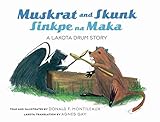
Grade schools have received a copy of Muskrat and Skunk by Donald F. Montileaux. The book provides an illustrated story of the origin of the Lakota drum in the Oceti Sakowin culture. Muskrat and Skunk is written in both English and Lakota to give a language and cultural experience to children.

Middle and high schools will receive copies of The Lakota Way by Joseph M. Marshall III. Through traditional stories, the book provides a deeper understanding of the 12 Lakota virtues that are crucial to the Lakota way of living: bravery, fortitude, generosity, wisdom, respect, honor, perseverance, love, humility, sacrifice, truth, and compassion.

Additionally, schools received two sets of poster maps and magnets representing all nine reservations in South Dakota, as well as information on Native titles and educational kits available from the South Dakota State Historical Society. Using the maps and magnets, students are able to identify and locate reservations and their locations using an interactive teaching tool.

Through these educational kits, we aim to provide students with more insight and knowledge about the Lakota, Dakota, and Nakota history and culture. Coupled with the Lakota Virtue Videos told by Lakota and Dakota elders, available free through our office, teachers have useful resources to engage student learning of the Oceti Sakowin Essential Understandings and Standards.

Each year, we host an annual summit for educators and students to learn more about tools and resources to ensure that today’s Native youth can achieve success both in school and in society. The Office of Indian Education will host the 2023 South Dakota Indian Education Summit Nov. 16-18 at the Crossroads Event Center in Huron. The summit will kick off on Thursday, Nov. 16, and continue into the weekend for a youth day on Saturday, Nov. 18. Youth Day is designed for K-12 students. Please visit our website for more information about the summit.

For those who have not visited our website, I encourage you to do so. We have abundant resources including lesson plans, videos, scholarships, and much more.

Monday, October 2, 2023

Making local food part of education in South Dakota

October is Farm to School Month, and with South Dakota’s deep agricultural roots, there’s no better place to celebrate.

The South Dakota Department of Education’s (DOE) Child and Nutrition Services (CANS) is working to help schools make local food a part of education for South Dakota’s kids. The Farm to School effort seeks to bring together agricultural producers and education providers for three main purposes: 

  • to educate children on where food comes from and the benefits of eating local food, 
  • to maintain strong connections between youth and agriculture, and
  • to offer opportunities for local producers and those involved in food programs to network and find opportunities to educate and feed our students with food grown in South Dakota.

Educators have lots of opportunities to be involved in Farm to School. Their curriculum, especially in science and math, can incorporate local foods. There are educational opportunities for students from preschool to high school. Field trips, tasting activities, cooking classes, in-school gardens, and school visits from farmers and master gardeners are just some of the ways that educators can teach youth about food production.

Farm to School is a win-win for students/schools, producers, and the community.

Ultimately, South Dakota’s Farm to School efforts will be successful when school cafeteria food comes as much as possible from producers within the state, and those eating the food understand and appreciate the hard work of those South Dakota farmers and ranchers who grow the food that the world consumes.

Earlier this summer, a group of stakeholders helped to develop goals for growing Farm to School in South Dakota. See the results of their work.

Janelle Peterson
Child and Adult Nutrition Services, South Dakota Department of Education 

Thursday, August 17, 2023

Welcome Back to School

One pretty clear indication that I chose the right profession is my feeling about the first day of school. The day you walk in the building and that wonderful amalgam of smells—floor wax, dry erase marker, new bookbag, and school breakfast—coalesce to evoke just one beautiful thought: school!

In my day, it was the smell of Elmer’s paste (that company’s glue just doesn’t have the same effervescence) that triggered a clamoring for school, but that different bouquet led to the same end, an acceptance of, and excitement for, a new academic year.

Even better than the fragrance of a new school year is the promise of one. This could be the year we turn the corner on elevated levels of absenteeism. The year literacy proficiencies leap forward as the result of a renewed application of the principles of the Science of Reading. The year the varsity football and volleyball teams grab state championships. The year that heals some of the old wounds from the painful COVID years, that changes the ache to a tingle. The year that we make a difference in one more student, one more athlete, one more musician, one more thespian, one more child.

It's the 4th of July, Christmas, your birthday, and Opening Day all rolled into one. And we have the privilege of working with South Dakota’s children, those whom parents place in our care and in our trust.


Dr. Joseph GraveWe are a blessed band working in a blessed profession. 

May 2023-24 fulfill every potential and every promise.


Sincerely,

Dr. Joseph Graves

Secretary
South Dakota Department of Education 


Thursday, May 4, 2023

Teacher Appreciation Week Communique from the Secretary’s Office

Four months ago, I left my school district—Mitchell—where I had served as superintendent for more than 23 years.  When I did so, I knew there were going to be some things I missed.  The students, first and foremost.  All the people I worked with.  All the sights and sounds of working in a school—the bells, the delightful squeals and chatter of a grade school playground, a freshly waxed terrazzo floor.

The best part was all those parents and local restaurants and insurance companies and PTAs who went to all that work, not because they didn’t think we had enough to eat, but because it was their way of showing just how much they really appreciate all of you.

Couple that with the knowledge that what you do is meaningful, that you make a genuine difference in the lives of children, and you wind up with a recipe for not just feeling appreciated but being genuinely worthy of appreciation.


Not half bad on a sunny day in May, the end of the academic year approaching, snow and ice safely in the past, and a nicely frosted cookie in the shape of an apple just waiting for you.

Dr. Joseph Graves

Secretary of Education

Monday, January 30, 2023

Gov. Kristi Noem proclaims Feb. 6-10 School Counseling Week in South Dakota

Executive Proclamation

Whereas, school counselors are employed in schools to help students reach their full potential; and,

Whereas, school counselors are committed to helping students explore their abilities, strengths, interests, and talents as these traits relate to career awareness and development; and,

Whereas, school counselors partner with parents to further the educational and personal growth of their children; and,

Whereas, school counselors work with teachers and other educators to help students succeed in school and set realistic goals for themselves; and,

Whereas, school counselors identify and utilize community resources that can enhance and complement comprehensive school counseling programs to assist students in becoming productive members of society; and,

Whereas, comprehensive school counseling programs are considered an integral part of the educational process:

Now, Therefore, I, Kristi Noem, Governor of the State of South Dakota, do hereby proclaim the week of February 6, 2023, as 

School Counseling Week 

in South Dakota.

Friday, November 18, 2022

Support for proposed social studies standards

Public hearings on proposed social studies content standards are underway. Learn more about the social studies standards revision process on the Department of Education website.

Here is a collection of op-eds in support of the proposed standards:

From Fred Osborn, Director of the Office of Indian Education in the South Dakota Department of Tribal Relations. Fred was a member of the Social Studies Standards Revision Commission.

One purpose of the South Dakota Office of Indian Education is to support initiatives in order that South Dakota’s students and public school instructional staff become aware of, and gain an appreciation of, South Dakota’s unique American Indian culture. As Director of the Office of Indian Education and member of both the most recent Social Studies Standards Revision Commission and the previous review team, I can say unequivocally that the current standards provide the most comprehensive framework to date for South Dakota’s students to learn about American Indian history and culture.

The proposed set of standards incorporate more than 70 references to Indigenous/Native perspective. They provide students with opportunities to review a full comprehensive history, from pre-contact Indigenous peoples of America to the revered nine tribes (Oceti Sakowin) in South Dakota today.

These standards allow children, Native and non-Native, to learn about the great leaders of the Oceti Sakowin Oyate, such as Crazy Horse, Sitting Bull, and Spotted Tail to name a few. They also allow children to learn about and understand the devastating effects of mandatory schooling of Native children at boarding schools, how treaties were made, broken, and sometimes upheld. And the standards are not without highlighting the successes of the nine tribes of South Dakota, making sure to spiral throughout K-12 the identification, sovereignty, and identity of the nine tribes in South Dakota and their historical impact on both the state and the United States of America.

In 2003 over 1,000 people attended the first Gathering and Healing of Nations in Pierre. This event was aimed at promoting reconciliation between Natives and non-Natives. One of the most profound developments from this meeting was ultimately the development of the Oceti Sakowin Essential Understandings whereby all South Dakota’s students, both Native and non-Native, could learn core concepts essential to understanding Oceti Sakowin history and culture. Developing mutual understanding and respectful appreciation of Lakota, Dakota, and Nakota history and culture narrows the divide that so often keeps us from meaningful engagement.

Great care was taken to mirror language and historically important events directly from the Oceti Sakowin Essential Understandings in the development of the proposed Social Studies Standards. Interweaving the essential elements and historical events from the Oceti Sakowin Essential Standards into History, Civics, Economics, and Geography further advances the vision from that initial meeting of the Gathering and Healing of Nations.

The proposed Social Studies Standards present an opportunity for an entire generation to learn and appreciate the diverse cultures of the nine tribes in South Dakota – an opportunity for an entire generation to find common respect of each other’s beliefs – an opportunity for an entire generation to learn South Dakota’s history whether it be good or bad. Such an opportunity should not be missed.


Social studies standards are meaningful, challenging, empowering

As an experienced classroom educator, I am excited about the potential of the proposed social studies standards. They provide a framework for students to gain critical knowledge, vocabulary, and understanding in key areas of history, government, geography, and economics.

A strong foundation in social studies is necessary to prepare productive citizens for the future. These standards are both meaningful and challenging and are grounded in democratic principles like civic participation, equality, and individual freedoms. It is important to note the proposed standards are guidelines for addressing what students should know by the end of each school year. These standards do not dictate the curriculum or how a teacher in each district will teach them.

When children are challenged with rigorous academic tasks, the results are greater student achievement. These standards allow South Dakota educators the freedom and flexibility to plan their instruction to the rigor level of each standard. By identifying purposeful pedagogy and critical content, the proposed standards build sound foundational skills for children at an early age that will move with them through their K-12 experience and on to college.

These skills, beginning with our youngest learners, will enable students to participate effectively in an increasingly diverse world. I believe one spectacular aspect of the social studies curriculum is that it can be incorporated into many different subject areas. For example, social studies can easily be integrated into language arts. In my classroom, when choosing a book for reading aloud to students, I often think of social studies or when learning history, my students can be practicing their writing or technology skills. Cross-curricular teaching not only saves time in an already busy teaching day but reveals to the students the interconnectedness of learning.

These standards were also written with parents in mind. There is a chronological ordering of the standards, which allows students and their parents the ability to see how and when events unfolded in history. The proposed standards spiral between grade levels building on prior knowledge. This fosters a continuum of learning that makes sense and is easily understood.

Another important element of the standards is they allow ample opportunities to include, like never before, South Dakota’s rich Native American history. The Oceti Sakowin Essential Understandings are referenced throughout the standards. South Dakota students will now learn about the great Chiefs of their state like Red Cloud, Sitting Bull, Standing Bear, Crazy Horse, and Spotted Tail and their important contributions. The issue of Native American boarding schools which were, in many cases, a systematic attempt to erase Native American culture, is brought to light. Nothing is sugar coated.

Social studies matters and the democratic traditions of our country deserve a place in today’s classrooms. The proposed standards may seem at first glance to be overly rigorous and time consuming, but complex social studies standards empower students to succeed in school and later in their careers and life. It is something I believe our students deserve. That is why I am excited to support the proposed standards.

--Janet Finzen is a long-time educator who lives in Dakota Dunes, South Dakota. She was a member of the Social Studies Standards Revision Commission.


South Dakota Education Standards for South Dakota Kids

There has been a great deal of public discussion about the proposed social studies content standards that will receive their first public hearing before the South Dakota Board of Education Standards on Sept. 19.

From local, state, and even national press coverage, to discussions in Main Street cafes, comments on social media platforms, and the public comments submitted specific to the standards, it’s clear a robust public discussion has begun on a process that typically draws little interest outside of the education community.

I’d like to take a moment to pull the conversation back to the big picture and offer a few thoughts, not about any particular verbiage included in the standards, or how many times certain words are mentioned, but to ask us to consider what we want our future to be.

The South Dakota Department of Education aspires for all students to graduate from the K-12 system ready for college, careers, and life. This is not something we take lightly. It’s on our website, we discuss it at staff meetings, we share it with teachers and administrators, and we infuse this approach into everything we do.

This means that while we certainly want all students to graduate high school, even more than that, we want them to graduate prepared to succeed in their adult lives. We want them to contribute as responsible citizens, voters, board members, and engaged volunteers who recognize how they can impact the world around them.

As South Dakotans, we want strong standards to guide our educators as they help our kids learn. Good standards frame out our expectations for what our young people learn and the skills they develop. They also serve as the foundation from which educators develop lesson plans and classroom experiences. With quality standards in hand, great teachers and instructional leaders translate these expectations for students into impactful classroom learning.

Well-prepared individuals often make the best servant-leaders. The goal of these standards is sound preparation, from which our students can effectively develop into the next generation of city council members, Little League coaches, county commissioners, church leaders, and legislators. These standards are the basis from which they can learn to critically analyze information, practice the art of debate, and see their opportunity to lead, equipped with the lessons of those who came before us.

Kids are capable of a great deal, often more than we think. Let’s use this opportunity to ensure our expectations challenge South Dakota students to learn and grow and become our next generation of South Dakota leaders.

--South Dakota Secretary of Education Tiffany Sanderson


Let’s Meet the Challenge

It’s no surprise to any of us that our civic education needs reforms. From Jay Leno’s joking to our national civics test scores, we’ve known for years our nation faces a grave challenge. Many, including me, have previously stated that our nation’s civic challenges are rooted in our historical ignorance. Having taught at the Air Force Academy and at Dakota State, I have experienced bright students in my class who were unable to do college level work as they did not have command of basic American history. So, in 2015, I organized several colleagues to sign a letter to the State Board of Education to say that more work was needed on those standards. Since then, I’ve served in various roles and kept working on this issue. I’ve researched and learned a great deal about what the root causes are. One of the causes is the belief that learning history doesn’t need to be equipped with historical evidence, but in a skills-based model, students should think critically about history because the students can always google the facts. This is akin to asking students to do math without knowing their numbers and results in students’ frustration and all of us falling further away from the solutions.

Fast forward to today, I was glad to serve on the SD Social Studies Standards Commission and believe these standards are a much-needed improvement and part of the solution. They are because the proposed social studies standards, just as math and English standards do, focus on key content early in a child’s education and re-introduces them with greater detail and complexity as the student gets older. Just as we design math instruction so first graders can count in order to do arithmetic, and 4th graders can do arithmetic in order to do algebra as 9th graders, we need to introduce, in a simple and clear way, the things like the Roman Republic in the early years so high school students can understand why John Adams sought to design a better republic in order to avoid Rome’s calamity. Despite this approach in math and English, many are saying Rome is too difficult for youngsters to understand and there’s too much “rote memorization.”

But the educational research on this is clear, as the well-known educational researcher E. D. Hirsch wrote, “. . .the idea that there are ages for which particular topics are appropriate has no scientific support." With this in mind, the Commission’s proposed standards introduce the invention of democracy by the Greeks, the fall of the Roman Republic, and other key events that impacted the thinking behind the Declaration of Independence and the formulation of our Constitution and Bill of Rights. Students then follow the American story along and learn how the American people have often failed and sometimes achieved to meet these high ideals. Students will also gain increased appreciation for how rare, or as one might say, exceptional, our nation is due to the high expectations set by the framers despite their, and our, persistent human failings. With these proposed standards we’re taking the best opportunity we’ve had in a long time to help students do better and meet the civic challenge facing us.

--Ben Jones is the Director of the State Historical Society and former South Dakota Secretary of Education

Friday, October 7, 2022

Governor proclaims Civics Awareness Month

Whereas, the framers of the United States Constitution formed a unique, new form of government intended primarily to protect individual citizens' liberties; and

Whereas, for those liberties to thrive, citizens have the responsibility to be well informed of their rights and the structure of their government and to cultivate a lifelong habit of learning about history and civic traditions; and,

Whereas, the founders of South Dakota, and the people who have inhabited this great state ever since, have valued education of all kinds, but particularly lifelong learning that sustains our nation's exceptionalism; and,

Whereas, the knowledge of our civic past cultivates a patriotism that fosters love of country, through which we hold ourselves to an objective standard of moral right and wrong, celebrating our successes and learning from our failures; and,

Whereas, our state and country are safer, stronger, and healthier when all citizens are engaged:

Now, Therefore, I, Kristi Noem, Governor of the State of South Dakota, do hereby proclaim October 2022, as

Civics Awareness Month

in South Dakota.


Wednesday, March 23, 2022

Pierre and Brookings teachers receive Milken Awards

Embracing a Growth Mindset Earns Pierre Math Teacher Nichole Bowman a $25,000 Milken Educator Award


Learn more about Nichole and find photos and video on her Milken Educator webpage.

Brookings Science Teacher Camrin Vaux Receives $25,000 Milken Educator Award for Personalizing Student Learning


Learn more about Camrin and find photos and video on her Milken Educator webpage.

Thursday, February 10, 2022

Nicole Weron: SD School Counselor of the Year

Nicole Weron (left) and Randi Hartman,
2021 SD School Counselor of the Year, in
Washington, D.C., for recognition events

Nicole Weron
School Counselor
Hill City Elementary School
Hill City, S.D.

A school counselor since 2004, Nicole Weron has a bachelor’s degree in human services and political science and a master’s degree in counseling and human resource development, both from South Dakota State University.

In her work at Hill City Elementary School, Weron built the K–5 comprehensive school counseling program and presents biweekly, structured counseling activities in every classroom. Her lessons are structured based on student need and are an integral part of students’ total educational experience. The school counseling program also incorporates support and collaboration from administrators, teachers, students, and the community. Teachers and parents value the program and consider it an equal partner in the educational process; it promotes the achievement of all students.

“I love caring for students and being a part of their support system,” Weron said.

Weron is a member of ASCA, the South Dakota School Counselor Association, the South Dakota Counseling Association and the West River Counseling Association.

Tuesday, February 8, 2022

Celebrating CTE Month


Laura Scheibe

Laura Scheibe is the South Dakota Department of Education's director of college, career, and student success.

As we celebrate CTE month this February, I would like to give a shout out to all our teachers who are doing amazing things to prepare our students for what comes next, whatever that looks like.

 We know that the time our children spend within the K-12 classrooms is formative. Every teacher has a role in shaping the path a child’s life will take. We also know that our CTE teachers play a special role in connecting students to experiences, content, and skills that will serve them in the world beyond the safe space of K-12. Every day you work with students to put together the pieces of core content, CTE learning, and career exploration and preparation. You are essential to helping our students see the bigger picture around them, to know what a career in South Dakota can offer, and the pieces they need to get there. In a time when we are seeing increased numbers of students disengaged from their learning, you help them see the relevance. In a time when so many other classrooms across the country are or have been virtual, you have been there day in and day out, teaching them safely. In a time when students need to be able to see how their future connects to their lives today, you give them that vision.

CTE month is an opportunity to celebrate what goes on in our classrooms every day of the school year. One way we can see the outcomes of that work is through the higher graduation rates of CTE students – tangible data that demonstrates the success you help students achieve. You can find that information and more on the newly-launched CTE report card, found on the state and district tabs here. Use this public tool to show your impact. 

Connect across your school buildings and across your communities – share your stories, spread the word, and help make CTE a part of every student’s academic journey. Let’s make this #CTEMonth epic for #SDCTE22.

Monday, January 31, 2022

Gov. Kristi Noem proclaims Feb. 7-11 School Counseling Week in South Dakota

National School Counseling Week focuses on the unique contributions of school counselors, highlighting the tremendous impact they make in helping students achieve school success and plan for a career. Please take time to thank your school counselor(s) for their efforts to help students learn, thrive, and grow and to make a positive impact on student attendance, behavior, and achievement through fostering career, academic, and social/emotional development.

Executive Proclamation

Whereasschool counselors are employed in schools to help students reach their full potential; and,

Whereasschool counselors are committed to helping students explore their abilities, strengths, interests, and talents as these traits relate to career awareness and development; and,

Whereasschool counselors partner with parents to further the educational and personal growth of their children; and,

Whereasschool counselors work with teachers and other educators to help students succeed in school and set realistic goals for themselves; and,

Whereas, school counselors identify and utilize community resources that can enhance and complement comprehensive school counseling programs to assist students in becoming productive members of society; and,

Whereas, comprehensive school counseling programs are considered an integral part of the educational process:

Now, Therefore, I, Kristi Noem, Governor of the state of South Dakota, do hereby proclaim

Feb. 7-11, 2022, as

School Counseling Week

in South Dakota.

Wednesday, November 3, 2021

Celebrating Native American Heritage Month: WoLakota Elder Interviews

Oceti Sakowin [oh-CHEH-tee shaw-KOH-we] means “Seven Council Fires” and refers collectively to the Lakota, Dakota and Nakota people. There are seven Oceti Sakowin Essential Understandings

Did you know? The WoLakota Project website includes a repository of Oceti Sakowin Elder interviews aligned with the Oceti Sakowin Essential Understandings. 

OSEU 1 - Lands & Environment: The original land base and natural resources of the Oceti Sakowin were under communal stewardship prior to immigrant settlement. Oceti Sakowin have a distinct and unique interrelationship with the environment that is essential to South Dakota. 

In this video, Lowell Amiotte discusses connections to land and people: 
Find discussion questions related to the video on this WoLakota Project webpage.

OSEU 2 - Identity & ResiliencyThere is variety and resiliency among individuals within the Oceti Sakowin Oyate [oh-YAH-tay] (people) as identity is developed, defined, and redefined by entities, by organization, and by people. A continuum of tribal identity, unique to each individual, ranges from assimilated to traditional lifestyle. There is no “generic American Indian.”

In this video, Stephanie Charging Eagle discusses Lakota identity and virtues: 
Find discussion questions related to the video on this WoLakota Project webpage.

OSEU 3 - Culture & Language: The origin, thought, and philosophy of the Oceti Sakowin continues in the contemporary lifestyles of Tribal members. Tribal cultures, traditions, and languages are incorporated and observed by many Tribal members both on and off the reservations.

In this video, Victor Douville discusses the four values:
Find discussion questions related to the video on this WoLakota Project webpage.

OSEU 4 - Kinship & Harmony: Oceti Sakowin kinship systems provide a framework for both individual and group behavior. Its unwritten rules promote harmony, compromise, a sense of order, and group cohesion.

In this video, Jace DeCory discusses sacredness and children: 
Find discussion questions related to the video on this WoLakota Project webpage.

OSEU 5 - Oral Tradition & Story: History told from the Oceti Sakowin perspective, through oral tradition and written accounts, frequently conflicts with the stories told by mainstream historians. An analysis of multiple perspectives reveals history in a more inclusive and accurate way.

In this video, Joseph Marshall III discusses who gets to tell the story:
Find discussion questions related to the video on this WoLakota Project webpage.

OSEU 6 - Sovereignty & Treaties: Federal policies and treaties put into place throughout American history have affected Oceti Sakowin people adversely. Tribes as sovereign nations have the authority to enter into government to government relationships. Currently, the relationship between each tribe, their state(s), and the federal government is not the same for each tribe.

In this video, Faith Spotted Eagle discusses the input of the grandmothers: 
Find discussion questions related to the video on this WoLakota Project webpage.

OSEU 7 - Way of Life & Development: The essential philosophy of the Oceti Sakowin wicoun [wee-CHO] (way of life) is based on the values of the Oceti Sakowin which have created resiliency of the Oyate (people). Tribal communities have put considerable effort into education and economic development, Tribal universities and colleges, wellness centers, cultural traditions, and language revitalization.

In this video, Sidney Bird discusses compassion, help, and respect:
Find discussion questions related to the video on this WoLakota Project webpage.


Monday, November 1, 2021

Celebrating Native American Heritage Month: WoLakota Project

We're celebrating Native American Heritage Month by spotlighting resources available to South Dakota K-12 educators to help them incorporate Native American culture and history into their teaching year-round, across all grade levels and content areas. 

The WoLakota Project is a collaborative effort between Technology and Innovation in Education (TIE) and the South Dakota Department of Education. The goals of the WoLakota Project include ensuring that the Oceti Sakowin Essential Understandings, written by Lakota, Dakota, and Nakota Elders in South Dakota, become a rich and respectful part of the learning experiences of students across the state. 

Tuesday, August 24, 2021

Celebrating Attendance Awareness Month 2021

 Executive Proclamation

Office of the Governor
State of South Dakota

WHEREAS, good attendance is essential to student achievement and graduation, and South Dakota is committed to reducing chronic absenteeism rates; and

WHEREAS, chronic absence - missing 10 percent or more of school or just 2 or 3 days a month - is a proven predictor of academic trouble and dropout rates; and

WHEREAS, the impact of chronic absence affects low-income students who are more likely to face systemic barriers in getting to school – such as unreliable transportation, lack of access to health care, unstable or unaffordable housing; and

WHEREAS, improving attendance and reducing chronic absence takes commitment, collaboration, and approaches tailored to challenges and strengths in each community; and

WHEREAS, chronic absence can be significantly reduced when schools, parents, and communities work together to monitor and promote good attendance and address hurdles that keep children from getting to school:

Now, Therefore, I, Kristi Noem, Governor of the State of South Dakota, do hereby proclaim September 2021, as

Attendance Awareness Month

in South Dakota.

Tuesday, May 25, 2021

Bennett County student earns Kenneth M. Smith Scholarship


Congratulations to Bennett County High School JAG-SD (Jobs for America's Graduates) senior Thea DuBray on earning a Kenneth M. Smith Scholarship! She is one of only 40 recipients nationwide. Thea plans to attend Black Hills State University to study criminal justice and sociology.
And kudos to Bennett County JAG Specialist Kim Claussen. Thea is Kim's second student to earn this prestigious scholarship since the JAG program started at Bennett County!

JAG-SD is a program supervised by the South Dakota Department of Education and is proven to help students persist through graduation. Jobs for America's Graduates (JAG) is a state-based national non-profit organization dedicated to supporting young people of great promise. In its 40-year history, the JAG Advantage has proven to deliver results.

The JAG-SD mission is to help young people of great promise succeed in both school and on the job, leading to productive and rewarding careers.

Learn more about JAG-SD on the Department of Education's JAG-SD webpage.

The Kenneth M. Smith Scholarship Fund and the Smith Scholars Program were established by the JAG Board to recognize the extraordinary leadership and service of the President and Chief Executive Officer of JAG, Inc., Kenneth M. Smith. Since 2009, the Kenneth M. Smith Scholarship Fund has awarded 229 scholarships for a total of $261,000 for participants enrolled in Jobs for America's Graduates (JAG). Contributions to the KMS Scholarship Fund have come from JAG Board members and partnering corporations who invest in the educational development of students in JAG.


Friday, April 30, 2021

Governor Noem proclaims Teacher Appreciation Week May 3-7

Whereas, South Dakotans believe in the importance of education for our students; and

Whereas, South Dakota teachers are our state's greatest assets for ensuring student success; and

Whereas, teachers are at the forefront of the effort to prepare South Dakota students to graduate from the K-12 system ready for college, careers, and life; and

Whereas, highly qualified teachers are trained professionals deserving of the utmost respect for the work they do; and

Whereas, our state is dedicated to supporting new and current teachers as well as recruiting future teachers from among the ranks of today's students by elevating the teaching profession; and

Whereas, South Dakota teachers have eagerly and capably stepped up to meet the unprecedented challenges due to COVID-19, 

Now, therefore, I, Kristi Noem, Governor of the State of South Dakota, do hereby proclaim May 3-7, 2021, as

Teacher Appreciation Week

in South Dakota.

Tuesday, March 16, 2021

Career Exploration: Why it is important


The South Dakota Week of Work will take place April 19-23. This exciting week is an opportunity for 10th and 11th grade students to explore career opportunities across the state, with many activities being held virtually, including live panel discussions with a wide variety of business and industry professionals. Registration information is now available on the 2021 Schedule page of the South Dakota Week of Work website.

Marcia Hultman is the Secretary of Labor and Regulation. Here she shares her thoughts on why career exploration is so important.

Hi, everyone. I’m Marcia Hultman, Cabinet Secretary of the Department of Labor and Regulation. As a former teacher, I’ve long known the importance of helping students make connections between classroom learning and the world of work.
  

I want to help students like yourselves understand WHY career exploration is so important. What you study in school sets an important stage for effective education and your future success.

While I was teaching English, I watched many students as they explored career options and made important decisions about their future. Their choices were not always for the right reasons or based on the best information.  

Now, as a leader of workforce development efforts, I continually see examples and hear stories underlining the importance of making informed career decisions.  

Employees in well-matched careers who enjoy their work and find personal value in it are generally more productive. Turnover resulting from employees discovering too late a field of work is not for them is difficult for employers who’ve invested time, money, and resources hiring and training them.

For young people and others choosing a career path, the investment in education and training is often costly. While there is always value in education, the return on investment is certainly better the more direct the path is to related employment.  

Our state’s employers need workers in many occupations. They offer great opportunities for youth and others in our great state of South Dakota.  

Resources to learn about these opportunities and make realistic, informed decisions about careers are invaluable. Our Labor Market Information Center has several career resources readily available. I encourage you to check out the Career Exploration and Planning Tools available on our website atdlr.sd.gov/lmic.  

The tools include: 

  • Age-appropriate K-12 materials for downloading or printing, including fun career awareness booklets and activities.  
  • A career interest survey with extensive online resources for learning more about occupations of interest.  
  • Exploration of occupations by career cluster.  

All resources are available at no charge online. I encourage parents to check out what’s available too. 

Making informed career decisions is a win-win for South Dakota employers and individuals. It is vital to your success to make a positive impact on our communities and economy as both workers and citizens. Please visitdlr.sd.gov/lmicto learn more about our career planning and exploration tools.  

The South Dakota Week of Work is sponsored by the South Dakota departments of Labor and Regulation and Education, the Governor's Office of Economic Development, the South Dakota Retailers Association, and the South Dakota Chamber of Commerce and Industry.


Thursday, March 4, 2021

Congratulations to 2021 Perkins Reserve grant recipients

Perkins Reserve grants provide funds to support the purchase of industry-grade classroom equipment or curricula and high-quality professional development opportunities.

Thank you to everyone who submitted a Perkins Reserve grant application this year. The Department of Education reviewed 48 total applications featuring a variety of projects. It’s exciting to see these innovative ideas from our state’s career and technical education programs! 

Congratulations to the following schools on receiving a 2021 Perkins Reserve Grant:

Britton-Hecla

Modernize manufacturing program with the purchase of a plasma cutting table

$   30,000.00

Corsica-Stickney

Add industry-grade welding equipment to enhance the manufacturing program

$     3,970.21

Dakota Valley

Add industry-grade welding equipment to increase the student capacity of welding courses and add dual credit courses

$   20,790.28

Deubrook

Enhance the Intro to Sports Medicine and Medical Terminology courses with industry-grade equipment

$     7,989.68

Flandreau

Enhance opportunities in ag metal fabrication with the purchase of a plasma cutting table

$   29,750.00

Gettysburg

Enhance opportunities in ag metal fabrication with the purchase of a plasma cutting table

$   28,195.07

Hitchcock-Tulare

Purchase industry-grade ag metal fabrication equipment

$   12,264.92

Hot Springs

Purchase plasma cutting system to enhance curriculum in Ag, Food and Natural Resources and Manufacturing clusters

$   30,000.00

McIntosh

Enhance the Ag, Food and Natural Resources program with drone technology

$     5,156.00

Northeast Technical High School

Purchase industry-grade equipment to enhance the Health Science Biomedical program and allow for increased student participation

$   14,888.00

Northern High Tech Consortium

Purchase an interactive seat to provide a real-life experience with the program’s heavy equipment simulator

$   15,845.00

Platte-Geddes

Implement a middle school MakerSpace Lab to foster career exploration and promote CTE

$   19,021.10

Sisseton

Provide instructor training and course equipment for CASE Animal Science and Plant Science courses that will provide CTE for Core Content opportunities for students

$   22,158.80

Wolsey-Wessington

Purchase industry-grade ag metal fabrication equipment

$     2,600.00

Thursday, January 28, 2021

Governor proclaims Feb. 1-5 School Counseling Week

Whereas, school counselors are employed in schools to help students reach their full potential; and,

Whereas, school counselors are committed to helping students explore their abilities, strengths, interests, and talents as these traits relate to career awareness and development; and,

Whereas, school counselors partner with parents to further the educational and personal growth of their children; and,

Whereas, school counselors work with teachers and other educators to help students succeed in school and set realistic goals for themselves; and,

Whereas, school counselors identify and utilize community resources that can enhance and complement comprehensive school counseling programs to assist students in becoming productive members of society; and,

Whereas, comprehensive school counseling programs are considered an integral part of the educational process:

Now, Therefore, I, Kristi Noem, Governor of the state of South Dakota, do hereby proclaim

Feb. 1-5, 2021, as

School Counseling Week

in South Dakota.